

By Monika Manser
Lectio Divina – Listening to God’s Word with our hearts
“And the word was made flesh and dwelt amongst us”
In Imaginative Contemplation we pray with the Scriptures, allowing Christ in the Scriptures to speak to us through our imagination. In Lectio Divina we pray with the Scriptures by dwelling on God’s word by listening with our heart. In Imaginative Contemplation, Jesus’ words, actions, teaching and relationships with people become familiar to us when we enter into the Scripture passage using our imagination. In Lectio Divina, God’s word becomes familiar to us by listening with out hearts and dwelling on His words. Listening with our hearts is something we do automatically in everyday life when we for example dwell on the beauty of nature or listening to someone we love or recall a poignant memory.
Lectio Divina or divine reading has four parts: reading, repeating, responding and resting.
Reading: Begin by reading the Scripture Passage slowly until a word or a phrase resonates with you. Then stop for the moment.
Repeating: Dwell on the words you have chosen. Repeat them again and again as though God is saying them to you. Try not to analyse them, just let them speak to you. Savour the words.
Responding: Be like Mary and “ponder these things in your heart”. Allow God’s heart to speak to your heart. He wants to be close to you so ask yourself what this invitation could mean. Speak to God with your heart. Be open to what he is trying to reveal to you. Share with God whatever is coming into your heart and mind.
Resting: Rest in the embrace and love of God. It is God’s response to us. Your whole being is focussed on God so dwell in the moment. When you feel ready, move on.
As you listen to the following passage, note which parts move you but don’t analyse anything. Then when you are ready, read, repeat, respond and rest and when you have dwelt on the words that initially resonated with you, continue on reading the passage and repeat the process.
Prayer
Acknowledge you are in the presence of God by saying the following prayer:
Direct O Lord and guide and influence all that is happening in my mind and heart during this time of prayer: all my moods and feelings, my memories and imaginings; my hopes and desires; may all be directed and influenced to your greater glory, praise and service and to my growth in your Spirit.
Amen
Let the Spirit enter our hearts and enlighten our minds to the promise of hope that Christ will come again to make all things new.
Reading
Matthew 24:37-44
At that time: Jesus said to his disciples: ‘For as were the days of Noah, so will be the coming of the Son of Man. For as in those days before the flood they were eating and drinking, marrying and giving in marriage, until the day when Noah entered the ark, and they were unaware until the flood came and swept them all away, so will be the coming of the Son of Man. Then two men will be in the field; one will be taken and one left. Two women will be grinding at the mill; one will be taken and one left. Therefore, stay awake, for you do not know on what day your Lord is coming. But know this, that if the master of the house had known in what part of the night the thief was coming, he would have stayed awake and would not have let his house be broken into. Therefore you also must be ready, for the Son of Man is coming at an hour you do not expect.’
Questions for reflection
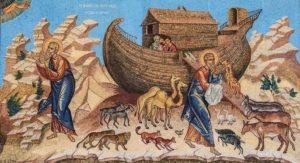
As you slowly read this Gospel passage, allow its words to soak into your mind. You may want to light a candle to help you ponder the passage, reflect on the image above or on the words of Pope Francis below. You might want to imagine that you are with Jesus telling you to stay awake.
1. What is this passage saying to you?
2. What word(s), sentence or phrase in this Gospel passage most caught your attention; most touched your heart; most challenged you; most comforted you? Is there anything in this passage that you found uncomfortable or startling?
3. ‘For as in those days before the flood they were eating and drinking, marrying and giving in marriage’ What ordinary things distract you from spending time in the presence of God? Are there times when you are too busy living that you fail to notice what is going on around you?
4. ‘Therefore, stay awake, for you do not know on what day your Lord is coming’. What can you do this Advent either practically or spiritually, to prepare for the Lord’s coming at Christmas? As you look towards the Season of Advent, what can help you to stay awake?
5. ‘If the master of the house had known in what part of the night the thief was coming, he would have stayed awake and would not have let his house be broken into.’ What “thieves” have you allowed into your life because you have not stayed alert? Have you become complacent in a cosy existence?
6. ‘Therefore you also must be ready, for the Son of Man is coming at an hour you do not expect.’ Do you find waiting difficult? Are you impatient when you do not know the exact plan? During this season of Advent what can help you be more aware of how the Spirit is at work in your every day life?
Pope Francis tells us:
In today’s Gospel, Jesus exhorts us to be ready for His coming: “Therefore, stay awake, for you do not know on what day your Lord is coming” (Mt 24: 42). Staying awake does not mean to have one’s eyes materially open, but to have one’s heart free and facing the right direction, that is disposed to giving and to service. This is staying awake! The slumber from which we must awaken is constituted of indifference, of vanity, of the inability to establish genuinely human relationships, of the inability to take charge of our brother who is alone, abandoned or ill. The expectation of Jesus Who is coming must therefore be translated into a commitment to vigilance. It is above all a question of wondering at God’s action, at His surprises, and of according Him primacy. Vigilance also means, in a concrete sense, being attentive to our neighbour in difficulty, allowing oneself to be called upon by his needs, without waiting for him or her to ask us for help, but learning to prevent, to anticipate, as God always does with us.
We shall now spend 10 minutes reflecting on this scripture passage by reading, repeating, responding and resting as described above. We will then share what we thought, felt etc. only if you are comfortable to do so.
End Prayer
Suscipe of St. Ignatius of Loyola
Take, Lord, and receive all my liberty,
my memory, my understanding,
and my entire will,
All I have and call my own.
You have given all to me.
To you, Lord, I return it.
Everything is yours; do with it what you will.
Give me only your love and your grace,
that is enough for me.
Scripture texts: from the Jerusalem Bible 1966 by Dartington Longman & Todd Ltd and Doubleday and Company Ltd